Biblically Accurate Lucifer: Truth, Story & Myths Explained
The character of Lucifer has been misrepresented for centuries, transforming from a once-revered figure into the symbol of evil we know today. Let’s delve into the concept of Biblically Accurate Lucifer, unraveling the truths, stories, and myths surrounding this intriguing persona.
Understanding the origins and interpretations of Lucifer is essential for grasping broader themes of morality and divine justice in religious texts. By exploring this subject, you’ll gain a fresh perspective on one of the most controversial figures in the Bible.
Biblically Accurate Lucifer Identity
In the Book of Isaiah (Isaiah 14:12), the name “Lucifer” emerges as part of a powerful taunt against the king of Babylon, painting a picture of a once-mighty figure now reduced to ashes. This portrayal transcends mere myth, challenging readers to consider the deeper implications of pride and downfall.
Lucifer, often equated with the figure of Satan in later Christian interpretations, was originally designed to symbolize the folly of ambition turned to arrogance, encouraging self-reflection on personal aspirations and the pitfalls of overreaching.
The Babylonian king, despite his terrestrial power, is likened to the morning star, heralding both light and the inevitable twilight of doom. This allusion serves as a reminder that positions of power are often ephemeral, urging us to contemplate the spiritual dimensions of our choices and the true nature of authority.
Biblically Accurate Description of Lucifer Appearance
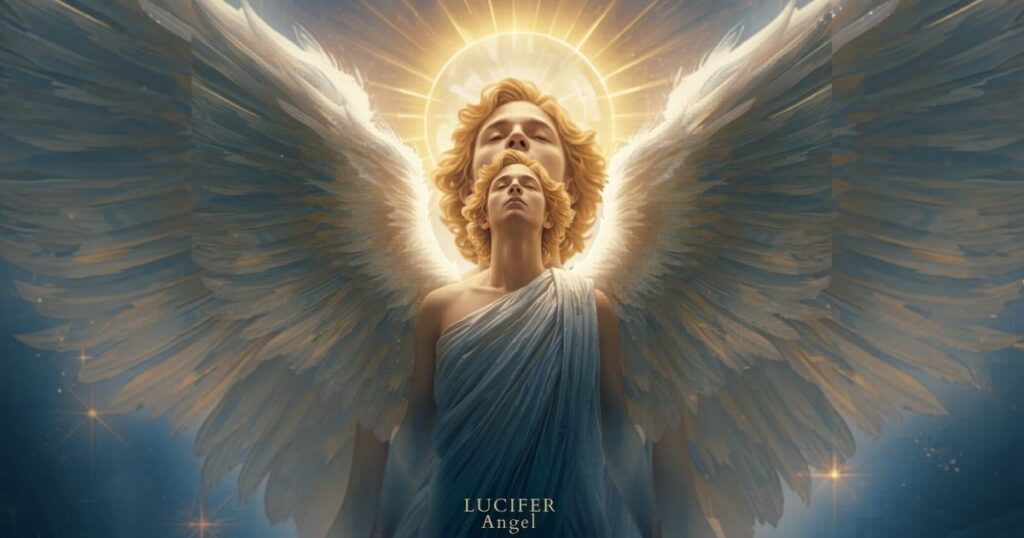
Lucifer’s appearance in biblical texts often defies the traditional imagery of horns and a fiery demeanor that Hollywood has popularized.
- These descriptions lean heavily on symbolic expressions, with characteristics that reflect deeper spiritual truths rather than literal features. The term “morning star” signifies a being of immense beauty and light, a contrast to the typical monstrous depictions that evoke fear.
- This illuminating aspect serves as a reminder of the duality of his nature, one that was created with brilliance and allure but ultimately fell from grace.
- The narrative invites us to dig deeper into the essence of Lucifer’s form, presenting a complex interplay of temptation and enlightenment.
- His initial state can be viewed as a metaphor for the seductive power of pride and ambition, making him not just an adversary, but a poignant symbol of the struggle within humanity itself.
The Morning Star Imagery in Isaiah’s Prophecy
In the Book of Isaiah, the term “morning star” serves as a powerful symbol, intricately woven into the ancient poetry that captivates both listeners and readers alike. This bright celestial object is often associated with hope and renewal, illuminating the dawn after a long night.
Isaiah invokes this imagery to signify not only the promise of redemption but also the transformative power of divine intervention. The morning star represents a profound spiritual awakening, inviting the faithful to embrace new beginnings even amidst trials.
The morning star’s radiant quality transcends mere astronomical fascination; it embodies the triumph of light over darkness, a central theme in Isaiah’s prophetic vision. The juxtaposition of despair and hope in the text reinforces the idea that, like the dawn, spiritual enlightenment unfolds gradually yet inevitably.
Does Lucifer Possess Physical Form After His Fall?
The Bible never explicitly describes Lucifer as an independent entity after his fall, leaving room for speculation and interpretation. Many theologians view his transformation as a shift from a being of light to one that embodies darkness, yet this doesn’t necessarily imply a tangible form.
| Biblical Description | Scripture | Spiritual Meaning |
| Roaring Lion | 1 Peter 5:8 | A predator always hunting human souls |
| Angel of Light | 2 Corinthians 11:14 | Appears beautiful and deeply deceptive |
| Ancient Serpent | Revelation 12:9 | Cunning and spiritually dangerous |
| Prince of the Air | Ephesians 2:2 | Unseen spiritual presence and influence |
| Dragon | Revelation 12:3 | Immense power and destructive authority |
The absence of a concrete form can be seen as a reflection of how we externalize our struggles with evil and desire. In this context, Lucifer’s influence is pervasive, existing in the choices we make and the temptations we face every day, urging us to reflect on our own capacities for darkness rather than focusing solely on a singular entity.
Common Misconceptions About Lucifer in Modern Culture
- In modern culture, movies and TV shows often depict Lucifer as the ultimate villain — a horned, red-skinned ruler of hell, emphasizing his role as a proud angel fallen from grace. This dramatization oversimplifies a more nuanced character present in various literary traditions.
- By casting Lucifer as a complex antihero, contemporary narratives invite audiences to explore themes of freedom versus control, blurring the lines between good and evil.
- These portrayals often overlook the rich historical contexts of Lucifer’s character. In texts like John Milton’s “Paradise Lost,” he becomes a tragic figure, eloquently articulating the pain of lost divinity and the desire for autonomy.
- As we rethink Lucifer’s role in culture, we can appreciate the layers of meaning that challenge us to examine our own beliefs about morality, rebellion, and the nature of evil itself.
What Scripture Actually Reveals About Lucifer
The depiction of Lucifer employs rich poetic language to illustrate a profound fall from greatness, encapsulating the themes of ambition and consequence. The imagery of falling from heaven is metaphorical, suggesting not just a physical descent but also a moral and spiritual decline.
This narrative, often interpreted as a cautionary tale, serves as a reminder of how pride and the desire for power can lead to a dramatic downfall.
Within the framework of ancient Near Eastern literature, the portrayal of Lucifer aligns with the broader motifs of defeated kings and fallen deities, suggesting that this character embodies not just individual ambition but also a collective warning against hubris.
Lucifer emerges as a complex figure who reflects humanity’s struggle with self-actualization and the perils of overreaching.
You may also like : Damian in Bible
The Hebrew Original: Helel and Its True Meaning
Helel, often translated as “morning star” or “light-bringer,” evokes multifaceted interpretations that extend beyond its celestial connotations. Rooted in Hebrew scripture, this term embodies a profound symbolism of illumination and enlightenment.
Helel is recognized for its association with the fall of a proud figure, often linked to the character of the Babylonian king in Isaiah 14:12, who is depicted as aspiring to ascend to the heights, only to face an inevitable downfall.
Jerome’s Latin Vulgate and the Birth of ‘Lucifer’
- In the 4th century, the Latin Vulgate, crafted by Saint Jerome, redefined the landscape of biblical interpretation. Among its most intriguing contributions is the introduction of the term “Lucifer,” derived from the Latin word meaning “light-bringer” or “morning star.”
- Initially linked to the planet Venus, this evocative term soon took on a darker connotation as it became intertwined with the narrative of Satan’s fall from grace, profoundly influencing Christian tradition and theology.
- The choice to use “Lucifer” in translating the Hebrew term in Isaiah 14:12 marked a pivotal moment in how early Christians understood this figure of rebellion.
- Jerome’s translation suggested not merely a celestial object but a once-glori
- ous being now fallen, resonating with the struggles against enlightenment and pride.
You may also like : Ezekiel Biblical Angels
Critical Distinction Between Lucifer and Satan in Scripture
In biblical texts, the terms “Lucifer” and “Satan” often ignite debates about their distinct roles and natures. Lucifer, derived from the Latin for “light-bringer,” is traditionally associated with a figure of beauty and wisdom, often linked to the passage in Isaiah 14:12.
This reference, often interpreted as a fall from grace, paints Lucifer not merely as a villain but as a once-noble being whose ambition led to downfall — a poignant reminder of the fragility of virtue amid power.
The figure of Satan embodies an archetype of opposition, representing deceiver and adversary. Within the context of Job, Satan operates as an opportunistic tester, challenging the loyalty of the faithful rather than merely opposing God directly.
Biblical Evidence Supporting Their Distinction
The distinction between Lucifer and Satan emerges through a nuanced examination of biblical texts. The figure of Lucifer, or Helel, is intricately tied to a human king, specifically in Isaiah 14:12-15, where the lament over a fallen figure resonates with themes of pride and downfall. This passage metaphorically criticizes the ambitions of earthly rulers, inviting readers to consider the broader implications of arrogance and self-exaltation, transcending a mere supernatural being.
| Attribute | Lucifer | Satan |
| Name Meaning | Light Bearer / Morning Star | Adversary / Accuser |
| Nature | Beautiful, Glorious, Perfect | Deceptive, Destructive, Corrupt |
| Primary Texts | Isaiah 14 / Ezekiel 28 | Job 1 / Revelation 12 / Matthew 4 |
| Assigned Role | Anointed Covering Angel | Accuser, Tempter, Deceiver |
| Time Period | Pre-Fall Existence | Post-Fall Activity |
| Primary Symbol | Morning Star | Serpent, Dragon, Roaring Lion |
Satan appears distinctly throughout the scriptures as part of a divine council, especially highlighted in passages like Job 1:6-12. Further emphasized in the New Testament, Satan embodies the archetype of tempter and deceiver, most famously in the encounter with Jesus in the wilderness (Matthew 4:1-11).
How Christian Tradition Merged These Figures
The merging of Lucifer and Satan did not originate directly from scripture but rather evolved through centuries of interpretation, cultural narratives, and theological development. Early Christian texts portray Lucifer as a figure of light, a once-fallen angel who sought to challenge divine authority.
As the church grappled with the nuances of good and evil, the character of Satan emerged in the New Testament, often described as an adversary to humanity and God’s purposes. Over time, these two figures once distinct in early theological thought began to intertwine in the minds of believers, largely influenced by allegorical interpretations and vivid imagery.
This blending gained momentum during the Medieval period, characterized by an increasingly visual culture and a growing fascination with the drama of spiritual warfare. Artists and writers began to depict Satan not just as an antagonist but as a tragic figure, a once-glorious being that fell from grace.
Protestant Reformers’ Rejection of the Equation
The Protestant Reformers’ rejection of theological equations stemmed from a profound commitment to returning to the original biblical texts, which they believed held the key to authentic faith.
They recognized the necessity of engaging with Scripture not as isolated verses but within their historical and literary contexts. By reading passages like Isaiah 14 with an eye to the socio-political milieu of ancient Israel, they sought to uncover deeper meanings that had been obscured by centuries of tradition and ecclesiastical interpretation.
The Reformers critiqued how interpretations of Isaiah’s imagery had been leveraged to support dominant power narratives. Instead, they argued for a faith experience rooted in personal conviction and direct engagement with God’s word, free from the layers of dogma that had been imposed over time.
Why This Theological Distinction Matters Today
The distinction between poetic imagery and doctrinal claims is crucial in a world saturated with spiritual expressions. This clarity prevents the blending of metaphor with theology, allowing believers to appreciate the beauty of religious language without conflating artistic interpretation with literal truths.
When poetic elements are treated as doctrine, it risks distorting essential beliefs, leading followers down ambiguous paths that may detract from core tenets.
The Narrative of the Fallen Angel in Scripture
The narrative of the fallen angel, often depicted as Lucifer, transcends mere folklore, delving into themes of free will, ambition, and the eternal struggle between good and evil. In Isaiah 14:12-15, the description of Lucifer’s ambitious fall invites readers to reflect on the fragility of pride and the consequences of overreaching.
| Scripture | What It Reveals |
| Isaiah 14:12-15 | His fall from heaven described through Morning Star imagery |
| Ezekiel 28:15-17 | Pride and beauty led to corruption and being cast out |
| Luke 10:18 | Jesus personally confirms seeing him fall like lightning from heaven |
| Revelation 12:7-9 | War in heaven; he was cast down along with his angels |
| Job 1:6 | He retains access to God’s presence even after the fall |
| 2 Peter 2:4 | Fallen angels were cast into darkness and held for judgment |
The concept of the fallen angel resonates within the human experience. Much like Lucifer, individuals today grapple with their aspirations, sometimes teetering on the brink of ethical compromise.
Lucifer’s Five ‘I Will’ Declarations of Pride
Lucifer’s five ‘I Will’ declarations reveal a profound exploration of pride and ambition, epitomizing the struggle between self-actualization and rebellion against divine order. Each proclamation begins with an unmistakable assertiveness “I will ascend,” “I will lift my throne,” that illuminates a deep-seated yearning for supremacy.
This drive for elevation transforms into an act of defiance, showcasing how pride can morph into a destructive force, leading to ultimate downfall rather than fulfillment.These declarations represent more than mere arrogance; they embody a cold calculation of separation from divine authority.
In wanting to be “like the Most High,” Lucifer hints at a universal temptation to equate oneself with the creator, showcasing humanity’s continuous battle with ambition.
The Nature of Sin: Pride in God-Given Perfection
Pride, often regarded as the root of all sin, finds its most insidious expression in the echo of our own self-perceived perfection. It is a paradox of the human condition: we are beings crafted in the image of God, yet we can turn that divine reflection into a distorted mirror of self-satisfaction. When we see ourselves as flawless, we risk elevating our own achievements above the grace that underpins them, becoming blind to our inherent imperfections and the need for divine reliance. This blindness not only separates us from humility but also diminishes the beauty of our journey toward spiritual growth.
Catastrophic Consequences of Angelic Rebellion
The catastrophic consequences of angelic rebellion transcend individual narratives, reshaping the very fabric of cosmic order. When these celestial beings chose disobedience, the ripple effects extended far beyond their realm, instigating a shift in the balance between good and evil.
Their fall echoes through history, manifesting in human struggles, temptation, and the perpetual battle between light and darkness. Each act of rebellion not only severed ties with the divine but also unleashed chaos that infiltrated the spiritual and physical worlds, highlighting the fragility of free will.
The aftermath reveals profound insights into the nature of authority and agency. The rebellion of angels serves as a cautionary tale about the consequences of hubris and the seductive allure of power.
The Scope of Rebellion: One-Third of Angels
In exploring the rebellion of one-third of the angels, one cannot overlook the profound implications this cosmic upheaval has on the overarching narrative of free will and the nature of good versus evil.
The decision of these angels to rebel hints at a complex hierarchy within the celestial realm, suggesting that even beings of immense power grapple with autonomy and moral choice.
Artistic Evolution of Lucifer’s Image Throughout History
The image of Lucifer has undergone a remarkable transformation across different artistic epochs, reflecting society’s evolving attitudes toward morality, rebellion, and the divine. In medieval art, Lucifer was often depicted as a grotesque figure, a monstrous embodiment of evil cast down from heaven.
They depicted Lucifer with striking beauty and intelligence, emphasizing his role as the ultimate rebel against an oppressive divine order, thus mirroring the cultural shift towards individualism and enlightenment.
The Romantic era further shifted perceptions, as artists like Delacroix and Blake embraced the tragic heroism of Lucifer. They expressed a complex emotional landscape, where defiance and despair intertwine, inviting audiences to empathize with the fallen angel.
Early Medieval Period: The Ethereal Blue Angel
In the Early Medieval Period, the figure of the blue angel emerges not merely as a celestial being, but as a powerful symbol woven into the fabric of changing beliefs and artistic expression.
of this era often utilized the vibrant hue of blue to evoke a sense of the divine, representing the unearthly realm that lay beyond human comprehension. This color, sourced from precious lapis lazuli, was not just aesthetically pleasing but also denoted a heavenly majesty, making the blue angel a cherished motif in illuminated manuscripts and church frescoe
High Medieval Transformation to Grotesque Forms
The High Medieval period, often celebrated for its chivalric ideals and religious fervor, also laid the groundwork for a curious transformation into the grotesque. This evolution can be traced through the dual lenses of art and architecture, where harmony and idealism began to warp into exaggerated forms that conveyed poignant societal commentaries.
The shift from the serene figures of Romanesque art to the contorted and expressive forms of Gothic sculpture reflects not just a stylistic departure but also a psychological one mirroring the chaotic riptides of an age grappling with existential questions amid burgeoning urban life and plagues.
Renaissance Romanticization: Milton’s Tragic Rebel
In the complex tapestry of the Renaissance, John Milton emerges as a tragic figure whose rebellion against societal norms intertwines with his profound exploration of human agency. Through characters like Satan in “Paradise Lost,” Milton crafts a narrative that transcends mere villainy to embody the struggle for autonomy and self-definition. T
his duality not only reflects the historical tumult of an era marked by religious upheaval and the questioning of authority, but also resonates with modern readers seeking to understand the implications of personal choice against institutional constraints.
Contrasts Between Artistic and Biblical Portrayals
Following table shows contrast between artistic and biblical portrayals:
| Category | Biblical Portrayal | Artistic / Cultural Portrayal |
| Appearance | Being of light and radiant beauty | Red skin, horns, monstrous form |
| Color | Luminous, associated with light | Red or dark, associated with evil |
| Physical Features | No horns mentioned anywhere | Horns as signature feature |
| Location | Destined for punishment in hell | Ruler and king of hell |
| Primary Warning | Appears as angel of light (2 Cor 11:14) | Obviously terrifying and dark |
| Core Focus | Pride and spiritual corruption | Dramatic external appearance |
Theological Insights from a Biblically Accurate Lucifer
In a biblically accurate context, Lucifer emerges not merely as a figure of rebellion but as a complex character embodying the profound struggle between divine purpose and personal aspiration.
His desire for autonomy serves as a mirror reflecting humanity’s own quest for identity and understanding in a world often shrouded in moral ambiguity. This interpretation invites a reevaluation of free will, suggesting that even the most flawed beings can grapple with existential questions that echo through time.
Lucifer’s narrative offers critical insights into the nature of temptation and the human condition. By recognizing his initial role as a bearer of light — before his fall we uncover the paradox of potential and failure inherent in all creation.
The Origin of Evil Within a Perfect Being
In pondering the origin of evil within a purportedly perfect being, one encounters a paradox that invites deeper reflection. The concept of perfection often implies an absence of flaws, yet the very existence of evil be it an inherent trait or a conscious decision challenges that notion.
Lessons for Humanity: Humility and Dependence on God
In a world often driven by self-sufficiency and the relentless pursuit of individual success, embracing humility can feel counterintuitive yet profoundly transformative. Humility opens the door to authentic relationships, allowing us to see our interconnectedness and the rich tapestry of human experience.
It reminds us that no achievement is solely our own, as every triumph is often built upon the contributions and sacrifices of others. By acknowledging our limitations and the need for support, we cultivate a deeper appreciation for community, fostering an environment where collaborative growth thrives.
Dependence on God offers a refreshing paradigm shift, encouraging us to release the illusion of control over life’s unpredictable currents. In surrendering to a higher power, we discover not only solace but strength; it’s in vulnerability that we often find our greatest fortitude.
Final Words
In exploring the biblically accurate Lucifer, we uncover a figure far more complex than the traditional image of a malevolent being. Scriptural texts unveil layers of ambition, beauty, and eventual downfall, offering insights into the nature of free will and rebellion against divine authority.
This nuanced understanding invites readers to reflect on their own perceptions of good and evil. As we navigate these themes, it becomes evident that Lucifer’s story serves as a cautionary tale about the consequences of pride and the pursuit of power.
FAQ’s
How was Lucifer Described in the Bible?
In the Bible, Lucifer is often associated with the figure of the morning star, particularly in Isaiah 14:12, which reads, “How you are fallen from heaven, O Lucifer, son of the morning.
Which Sin can God Never Forgive?
The sin that is often cited as unforgivable is referred to as “blasphemy against the Holy Spirit.” This concept appears in the Gospels, where Jesus warns against attributing the works of the Holy Spirit to evil.
What Does Lucifer Actually Look Like?
The appearance of Lucifer has been shaped by centuries of literature, religious texts, and popular culture, leading to a variety of interpretations.