Is Tristan in the Bible? Meaning, Origin & Spiritual Insight
Names hold power, and their meanings can reveal much about cultural and religious identities. When asking, “Is Tristan in the Bible,” we embark on a journey through historical narratives and their modern adaptations.
While Tristan does not appear in the Bible, understanding his background illuminates the ways biblical themes echo in literature and folklore. This article will discuss the origins of the name Tristan along with its relevance in various narratives that draw upon biblical influences.
Is Tristan in the Bible?
The name Tristan does not appear in the Bible. Its roots trace back to old romances, particularly linked to the famous tale of Tristan and Isolde, a story of love and tragedy from medieval literature.
In this context, the name is believed to derive from the Latin word “tres,” meaning “third,” or from the Celtic word “drystan,” which suggests a connection to a tumultuous fate. While it evokes themes of love and longing, its absence in biblical texts raises questions about the cultural significance of names in spiritual narratives.
People often seek meaning and connection through names found in religious texts. The Bible is rich with names steeped in history and theology, such as David, Joshua, and Mary, each carrying deep cultural and spiritual weight.
The name Tristan, however, represents personal and literary significance rather than religious. This distinction offers a fresh perspective on how names evolve in different contexts — shifting from sacred texts to popular folklore.
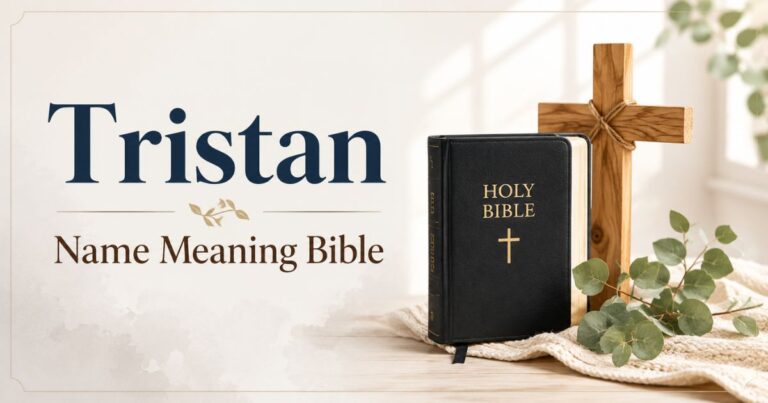
You can also read Tristan Name Meaning Bible
The Real Origin of Tristan—Celtic Roots Meet Christian Europe
Here you can found the origin of Tristan :
The Latin Connection
The story of Tristan is deeply intertwined with Latin influences that permeated early medieval Europe. Latin, as the liturgical and scholarly language, shaped many narratives.
Scholars and poets adapted Celtic legends into a framework that appealed to Christian audiences, merging old tales with new morals. This transformation created a rich tapestry of storytelling, allowing Tristan’s adventures to resonate with a wider public.
The Celtic Alternative
Original Celtic tales of Tristan highlight themes of honor, loyalty, and tragic love, rooted in the natural world. The Celtic approach offers a more raw and emotional narrative, reflecting the harsh realities of life and the mysteries of fate.
This contrast invites readers to consider how the mythical past coexists with the emerging Christian ethos, resulting in a complex portrayal of heroes navigating moral dilemmas, revealing deeper truths about human existence.
Medieval Synthesis
As narratives evolved, the synthesis of Celtic and Christian elements became apparent. Retellings of Tristan’s story began to incorporate Christian virtues such as redemption and sacrifice, transforming the hero into a vessel for spiritual exploration.
This blending of cultures not only enriched the storytelling but also sparked a dialogue about identity and faith during a time of great change across Europe. What remains captivating is how these different roots can still be traced in modern adaptations, continuing to inspire today’s storytellers.
Biblical Themes That Mirror Tristan’s Meaning
Tristan embodies deeper themes that resonate with various biblical stories, revealing timeless truths about love, sacrifice, and resilience.
Tumult and Divine Purpose
Life often throws chaos our way, much like the struggles faced by biblical figures. Just as Joseph was sold into slavery yet rose to greatness, Tristan’s journey reflects how turmoil can unveil our true purpose. These challenges, instead of hindering us, often guide us closer to our divine calling.
Sorrow as Sacred Pathway
In the Bible, lamentation is a theme woven deeply into the fabric of faith. Think of Job’s sufferings, which led to profound revelations about resilience and hope. Tristan’s experiences of sorrow echo this sentiment, reminding us that tears can be transformative. Each hardship opens our hearts to deeper understanding and connection with the divine.
From Grief to Glory
The resurrection of Christ encapsulates the journey from grief to glory. Just as believers find victory in what seems lost, Tristan symbolizes triumph over despair. This narrative encourages us to see beyond present struggles, illuminating a path towards joy and fulfillment. Embracing our pain can ultimately lead us to extraordinary joys.
Five Spiritual Symbols Embedded in Tristan’s Identity
Tristan’s journey is rich with meaning, revealing five spiritual symbols that shape his identity. Each symbol offers a unique lens through which to understand his life experiences, guiding him in moments of doubt and awakening deeper layers of awareness.
The Phoenix: Rising from ashes, the phoenix symbolizes transformation and renewal in Tristan’s life. This reflects his ability to overcome challenges, reminding us that every setback can lead to a fresh start.
The Lotus Flower: Rooted in muddy waters but blossoming into beauty, the lotus represents purity and spiritual awakening for Tristan. It teaches us that our environment does not dictate our potential; rather, clarity and growth can emerge from difficult circumstances.
The Spiral: This ancient symbol is found in nature and art, representing growth and evolution. For Tristan, it signifies his journey of self-discovery, illustrating that personal development is a continuous, unfolding process.
The Eye of Horus: Often seen as a protective emblem, the Eye of Horus symbolizes insight and vision in Tristan’s identity. It promotes the idea of seeing beyond the surface and gaining deeper understanding in life’s situations.
The Tree of Life: A powerful representation of interconnection, the Tree of Life embodies Tristan’s relationships and roots. It serves as a reminder that, like a tree, we thrive in community, drawing strength from those around us.
Tristan as a Christian Name—The Verdict
The name Tristan has a rich history and intriguing ties to various cultures, making it a worthy consideration for Christians seeking meaningful names. While it may not have direct biblical roots, its significance lies in its overall intent and the values it embodies.
What Makes Any Name “Christian”
Names often reflect the values and beliefs of those who bear them. A “Christian” name is ultimately one that aligns with Christian virtues, regardless of its origins.
Historical Precedent
Tristan, derived from a legend of chivalry and love, has captivated hearts for centuries. Its story often mirrors themes of sacrifice and loyalty, qualities that resonate deeply within the Christian faith.
Intention Matters Most
Choosing a name like Tristan can be seen as a commitment to embody the virtues associated with it. The heartfelt intention behind a name plays a crucial role in its significance.
Practical Considerations
In today’s world, practicality also matters. Tristan is unique yet easily recognizable, breaking away from overly common names while still fitting well in a modern context.
Better Than Many “Biblical” Names
Unlike some biblical names that may carry heavy baggage, Tristan can offer a fresh narrative. Its cultural richness may inspire a broader understanding of what it means to live a Christian life.
Bible Verses Perfect for a Child Named Tristan
Tristan is a name filled with strength and adventure. Let’s explore some Bible verses that can guide and inspire him as he grows.
Proverbs 3:5-6: “Trust in the Lord with all your heart.” This verse encourages Tristan to rely on God, guiding him through life’s twists and turns.
Philippians 4:13: “I can do all things through Christ who strengthens me.” A powerful reminder that no challenge is too big when he has faith.
Jeremiah 29:11: “For I know the plans I have for you.” This verse assures Tristan that God has a beautiful purpose for his life, filled with hope and promise.
Psalm 139:14: “I praise you because I am fearfully and wonderfully made.” A perfect affirmation for Tristan to embrace his uniqueness and inner strength.
Matthew 5:14: “You are the light of the world.” This verse inspires him to shine brightly, bringing joy and positivity to those around him.
Isaiah 40:31: “Those who hope in the Lord will renew their strength.” A sweet reminder that perseverance and patience shape strong character.
Ephesians 6:1: “Children, obey your parents.” This verse fosters respect and love in family bonds, teaching Tristan the importance of listening and learning.
Conclusion
Tristan may not be a character found in the Bible, but his story encapsulates themes that are very much alive in biblical texts. Love, loyalty, and the struggle between duty and desire are central to both narratives. This reflects a universal human experience that transcends time and culture.
By examining such literary figures alongside scripture, we can uncover profound insights and lessons that still resonate today. Explore these connections further and deepen your appreciation for the rich tapestry of stories that inspires our faith and understanding.
FAQs
Who is Tristan?
Tristan is not mentioned in the Bible. He is a character from Arthurian legend, a story set in medieval times, not in the biblical texts.
Where does the Tristan story come from?
The Tristan story originates from European medieval literature, particularly the romance of “Tristan and Isolde.” This tale explores love, betrayal, and chivalry.
Are there any Christian themes in the Tristan story?
The Tristan story does touch on themes of honor and sacrifice, which can align with Christian values. However, it is not specifically a Christian tale.
Are there any characters named Tristan in the Bible?
No, there are no characters named Tristan in the Bible. The Bible has different names and stories that do not include him.